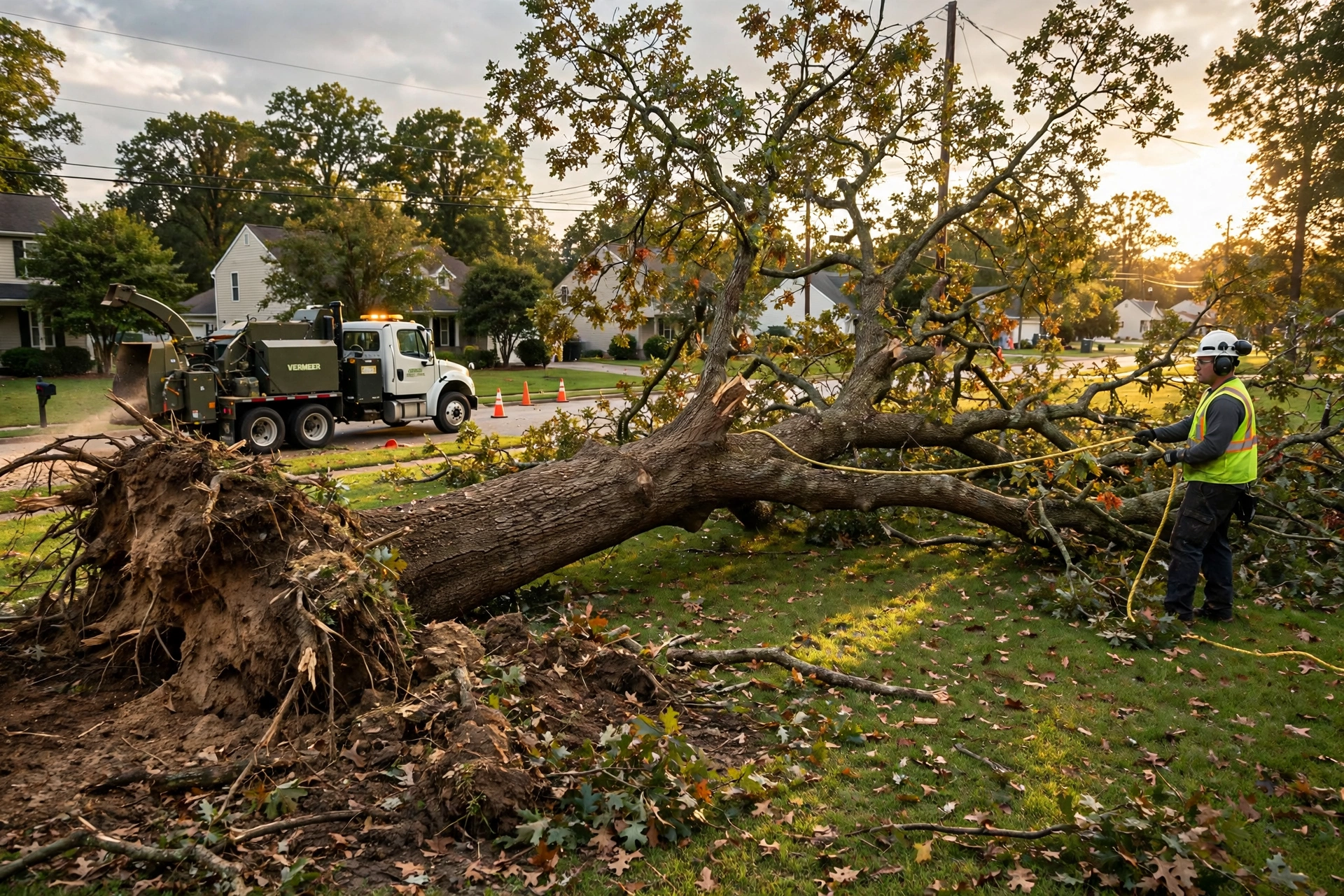
A dead tree is a standing countdown. The wood dries, the roots rot, the limbs get brittle — and every month it stands, it gets more dangerous to remove and more likely to come down on its own terms. Dead trees don't fall politely; they shed limbs first, then fail at the base, usually in a storm, usually onto something.
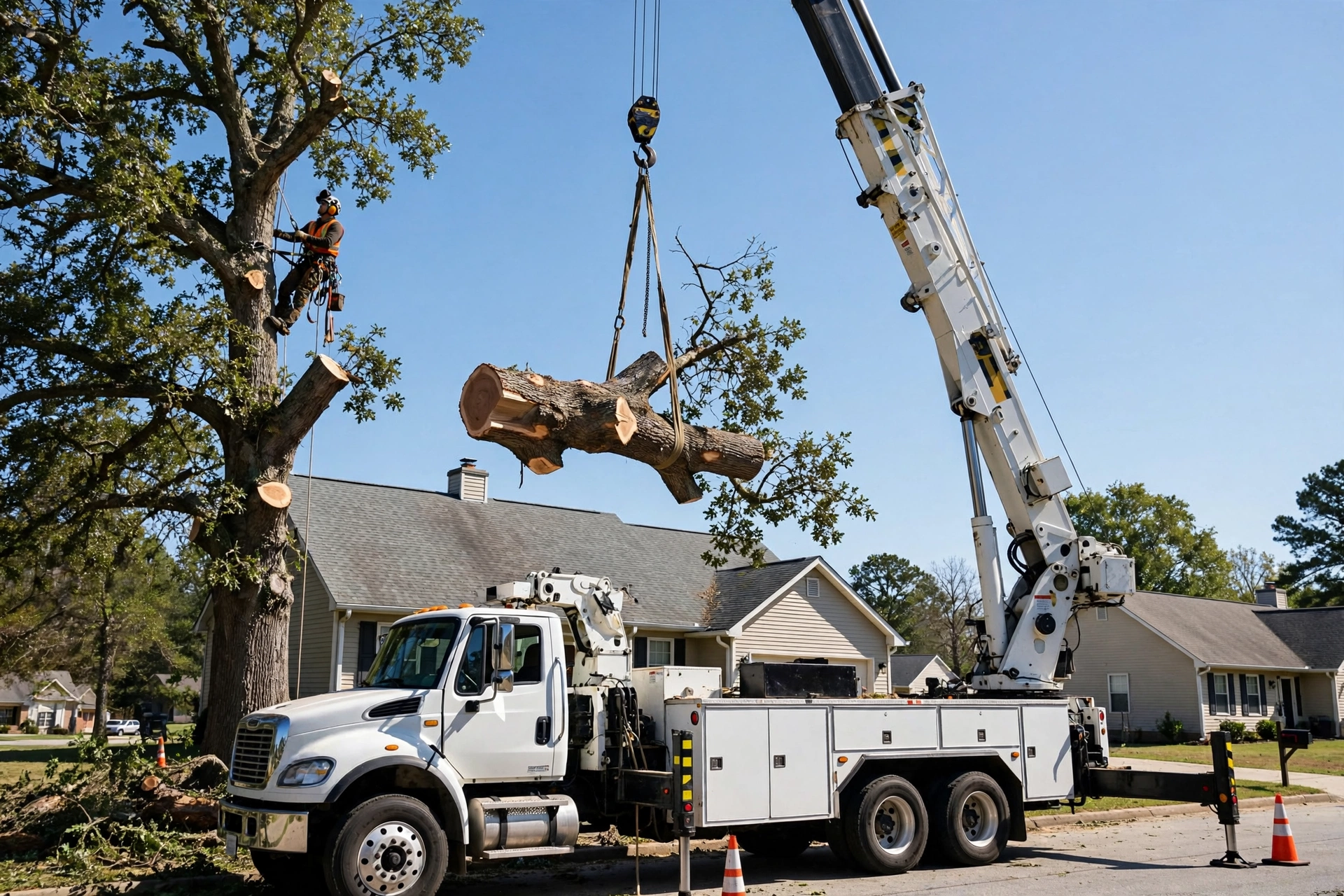
We specialize in the removals other crews walk away from: dead oaks too brittle to climb, hollow trunks, trees with compromised root systems. Crane-assisted sectional removal, rigging from adjacent anchors, or controlled felling where the space allows — the method follows the tree's condition, and the condition of a dead tree is exactly what we assess before anyone leaves the ground.
If you have a tree that's fully dead, mostly dead, or dropping bark and limbs for no seasonal reason, call now. A dead tree over a house, driveway, or play area is one of the few tree situations where waiting is never the right move.
Signs your tree is dead or dying
- No leaves in growing season, or leaves only on a few branches
- Bark peeling off in sheets, exposing smooth wood underneath
- Shelf fungi or mushrooms growing on the trunk or root flare
- Large dead limbs dropping in calm weather
- The trunk sounds hollow when tapped, or shows cavities
How we remove dead trees
1 Assess the decay
Dead trees get a hands-on assessment before anything else: sounding the trunk for hollow sections, checking the root flare for rot, testing limb strength. A dead tree's structure determines the removal method — climb it, crane it, or fell it — and guessing wrong is how accidents happen.
2 Choose the safe method
Solid dead trees can often be climbed and sectioned down. Brittle or hollow ones get the crane, where no climber's weight ever loads the compromised wood. Where there's room and the lean cooperates, controlled felling is the simplest answer. The tree's condition picks the method.
3 Remove in controlled pieces
Dead wood is unpredictable — it snaps instead of bending, and rigging loads behave differently than on live trees. We cut smaller, rig conservatively, and keep everyone clear of the drop zone. Slow and controlled beats fast and sorry on dead removals.
4 Grind and restore
The stump gets ground, the debris gets hauled, and the spot gets finished for whatever comes next — lawn, a new tree, or just open yard. Many Collierville homeowners replant in the same season; ask us about species that suit the spot.
Dead trees in Collierville
Collierville's dead-tree population has a local signature. Drought-stressed water oaks from dry summers, lightning-struck pines along the old farm tree lines, Bradford pears that simply aged out of their short natural lifespan — and construction-damaged trees in newer subdivisions that took five years to die from root cutting during the build. Dead ashes deserve a mention too: emerald ash borer has been moving through West Tennessee, and dead ash trees are notoriously brittle — they break apart in ways that surprise even experienced climbers. Dead trees in Collierville rarely stand alone in a field; they stand over roofs, pools, and fences on suburban lots, which is why the removal method matters as much as the removal. We read the decay, pick the method, and take them down before the storm does.
Need dead tree removal in Collierville?
One call connects you with a local technician. No forms, no waiting.